
An Industrial Revolution
The work jacket is one of the great symbols of the industrial revolution that swept through 19th-century France. A garment with pockets, comfortable, durable, designed to give workers freedom of movement. Its colour — Prussian blue — was the accidental discovery of a Berlin pigment maker in the 18th century. Cheap to produce, it became the default dye for the first mass-manufactured workwear.
May '68 and the Barricades
After May 1968, the worker's jacket became a garment of protest. When labourers refused to wear it as a sign of rebellion, the students on the barricades picked it up to make common cause. It crossed the line — from uniform to statement.
"Wearing this blue is a political act."
On the Floor of the Assembly
June 1997. Freshly elected to the National Assembly, left-wing MP Patrice Carvalho — a Saint-Gobain factory worker — walked into the chamber wearing the famous jacket. "I represent 70% of the French people," he explained. The blue jacket, a medium for making the invisible visible.
Hollywood Takes Notice
Elevated into new sex symbols, actors Jeremy Allen White, Jacob Elordi and Austin Butler each adopted what Americans call "the chore coat." Worn faded over a slogan tee or against bare skin, it acquired an aura that turns heads — proof that nothing is more compelling than a garment that has truly lived.
The Grand Reinvention
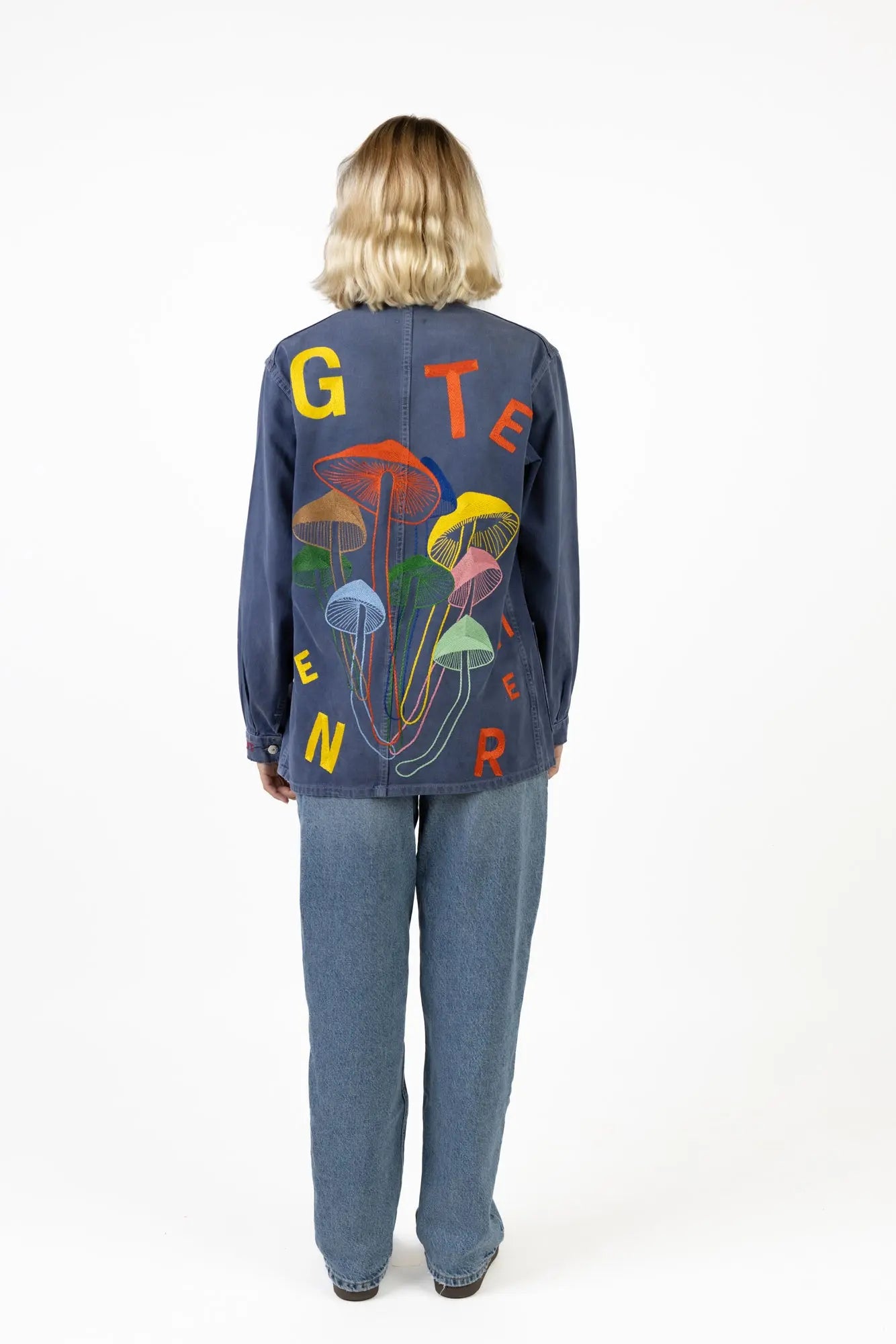
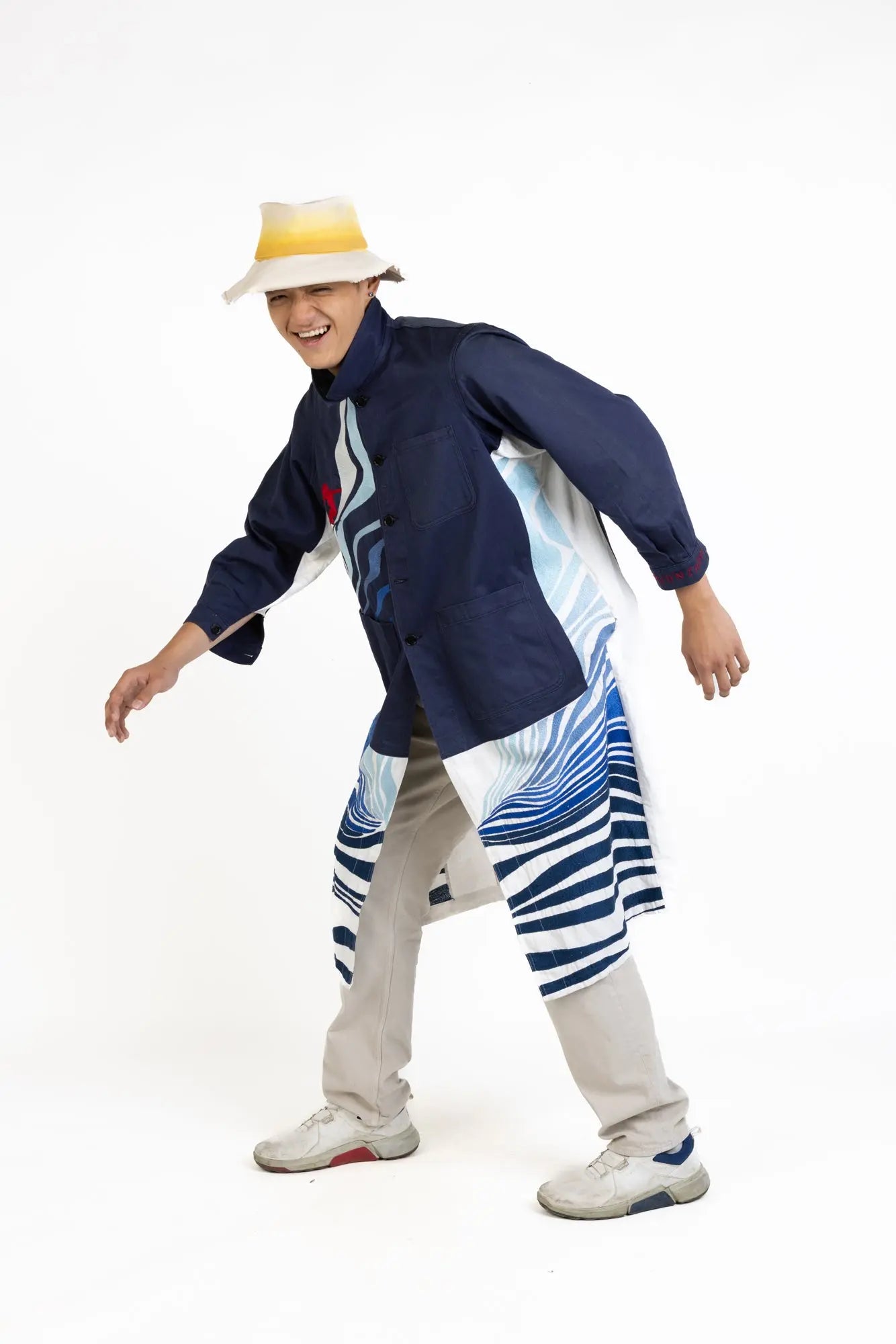
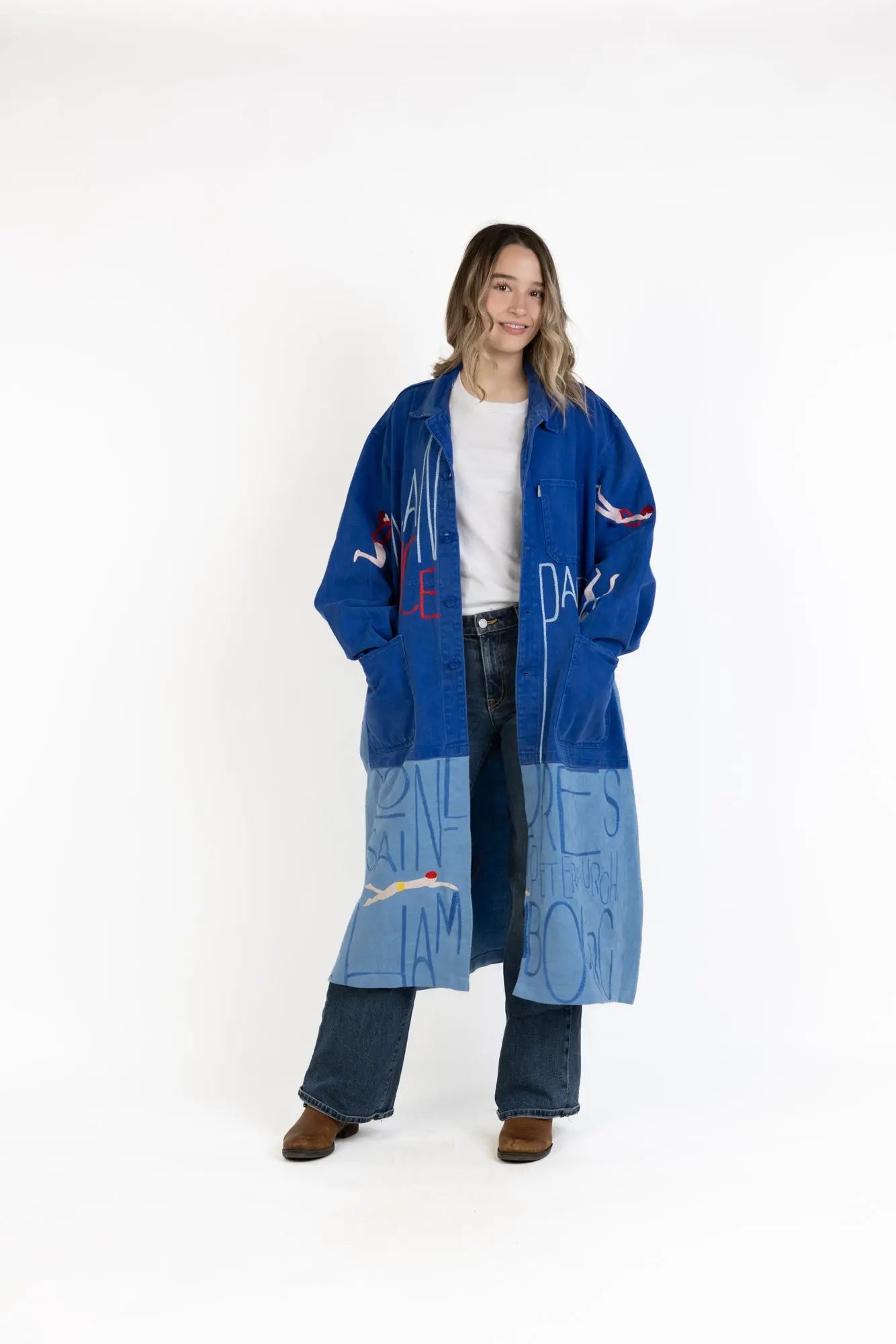
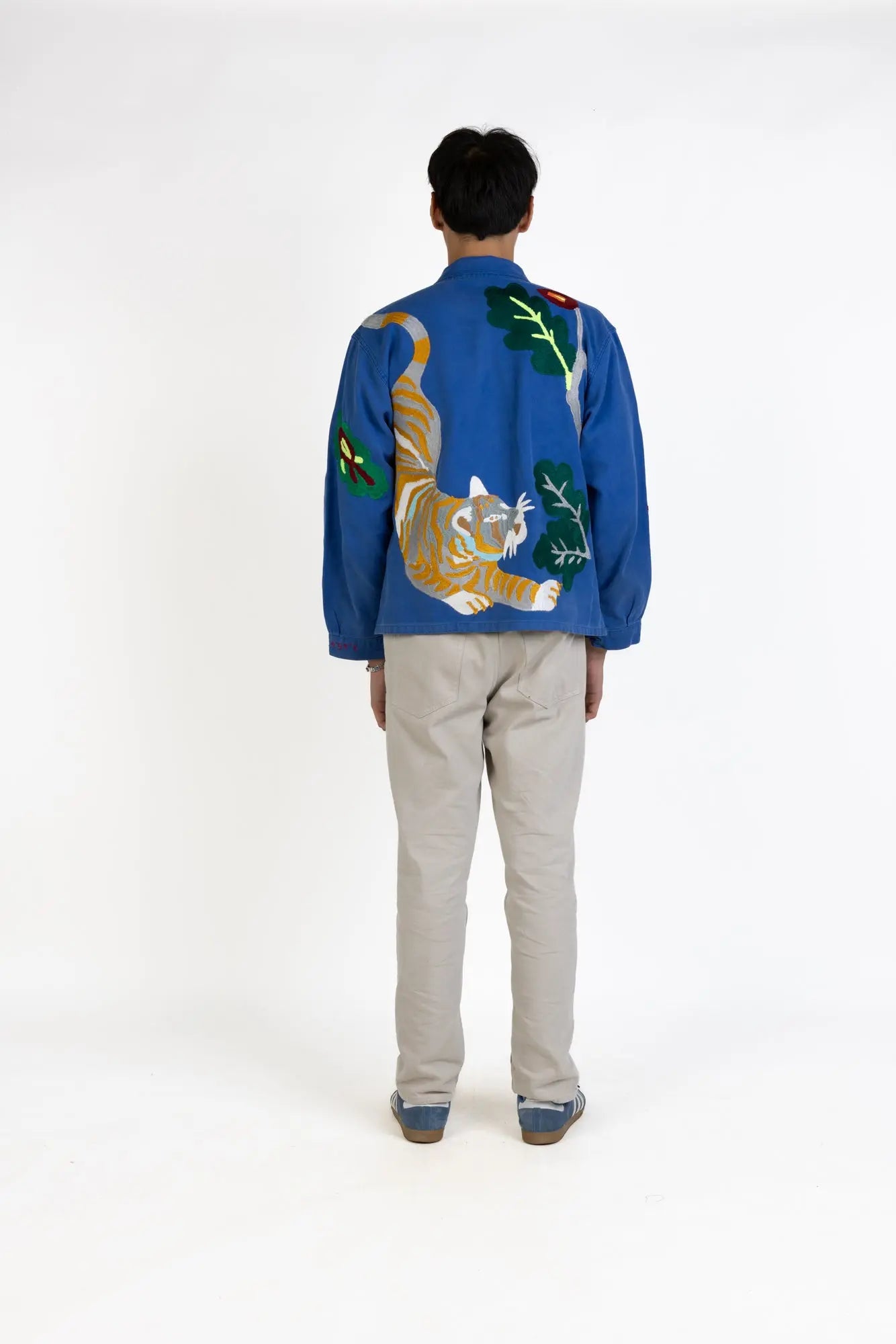
At Kilometre Paris, the worker's jacket becomes an embroidery canvas. Each piece is unique, hand-stitched by artisans from around the world. It is no longer a uniform — it is a work of art. A textile memory that carries within it every kilometre ever travelled.
"A worker's garment, reinvented as a traveller's."